Loan Repayment Legal Options: Smart Ways to Handle Debt
Introduction
Let me guess. You’ve got EMIs stacking up, calls from unknown numbers you’re scared to answer, and this heavy knot in your stomach that just won’t go away. Yeah. I know that feeling. Not personally, but I’ve sat across the table from enough people living through it.
My neighbour — a guy who ran a small garment business for twelve years — broke down in front of me one evening. Three loans.
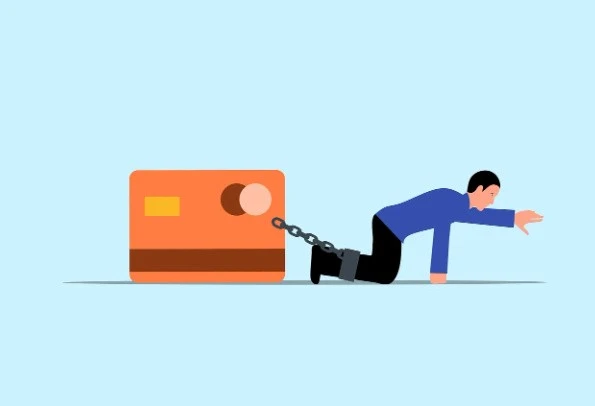
Two credit cards maxed out. And absolutely no clue that the law actually gives borrowers some pretty solid ways out. He thought his only options were to somehow magically arrange the money or lose everything.
He was wrong. And if you’re thinking the same way right now, you’re wrong too.
This isn’t one of those articles that throws legal terms at you and leaves you more confused. I’m going to walk you through your actual options. Things that real people have used. Things that work.
Let’s Clear This Up — You’re Not Going to Jail
I need to say this right at the top because the fear of arrest keeps people from thinking straight.
Loan default is not a criminal offence. Full stop.
It falls under civil law. That means the bank can take you to civil court. They can try to recover money through legal channels. But they cannot have you arrested simply because you missed your EMIs. This applies whether it’s a personal loan, a home loan, a credit card, or a business loan.
There are exceptions, though.
If you forged documents to get the loan approved, that’s fraud — and fraud is criminal. If you took money with zero intention of ever repaying, that’s cheating under the Indian Penal Code. And if a cheque you issued bounced and you didn’t respond to the legal notice within 30 days, Section 138 of the Negotiable Instruments Act kicks in.
But honest borrowers who hit hard times? The law treats you very differently from criminals. Remember that the next time a recovery agent tries to scare you with talk of police complaints.
Why People Dig Themselves Deeper Without Realising It
Before we talk solutions, I have to mention the traps. Because I’ve seen smart people fall into every single one.
A relative of mine panicked when he missed two EMIs on his car loan. What did he do? Downloaded one of those instant loan apps and borrowed at nearly 40% annual interest to cover the EMI. Within three months, he owed more than he started with — and now had two lenders chasing him instead of one.
Here’s what people do that makes the situation worse, almost every time:
- They ghost the bank. Stop answering calls, don’t open letters. The bank doesn’t forget — it just escalates.
- They borrow from worse sources. Loan apps, moneylenders, and credit cards to pay off other credit cards. This is a spiral, not a solution.
- They sell things in a rush. Gold at a loss. Property below market value. Panic selling is never smart.
- They make promises they can’t keep. Telling the bank “I’ll pay next month” when they know they can’t just buy a few weeks destroys credibility.
The single best thing you can do when you’re struggling with repayment? Stop hiding. Start communicating. And learn what tools the law actually puts in your hands.
Option 1: Loan Restructuring — Your First and Best Move
What Does This Actually Mean?
When a bank restructures your loan, they change the terms. Longer repayment period, smaller EMI, a temporary break from payments — whatever makes the loan manageable for you again.
Who Should Ask for This?
Restructuring makes sense when your problem is temporary. You lost a job, but you’re qualified and actively looking. Your business had a bad quarter, but the fundamentals are solid. A health emergency ate through your savings,s but you’re recovering.
How to Actually Get It Done
Don’t just call the helpline and hope for the best. That barely works. Here’s what does:
- Write a proper hardship letter. Explain your situation clearly — what happened, where you stand financially right now, and what you can realistically afford going forward.
- Attach documents. Medical bills, termination letter, bank statements showing reduced income — whatever supports your case.
- Ask for a sit-down meeting with the branch manager or the recovery department head. Face-to-face conversations work way better than phone calls for this.
- Come with a specific proposal. Don’t just say “please help me.” Say something like “I can manage ₹8,000 per month for the next 12 months, and then return to the full EMI.”
Does This Actually Work?
More often than people think. I know someone — a school teacher — who got her education loan EMI reduced by 35% for an entire year after she showed the bank her husband’s medical expenses. The whole process took about three weeks. No lawyers, no fighting.
Banks don’t publicise this, but taking a borrower to court costs them ₹50,000 to ₹2,00,000 easily. Legal proceedings drag on for years. If they can restructure your loan and keep you paying, even at a lower amount, they’d rather do that. Use that knowledge to your advantage.
Option 2: One-Time Settlement — Pay Less, Close the Account
How Does This Work?
You approach the bank and say — I can’t pay the full outstanding amount, but I can pay a lump sum right now. If you accept, close the loan. The bank evaluates, negotiates, and if they agree, the account gets closed at a reduced amount.
What Kind of Discounts Are We Talking About?
This depends on the loan type, how old the default is, and how well you negotiate. But here’s a rough picture from real cases I’ve come across:
| Loan Type | What Banks Usually Accept | Best I’ve Seen |
|---|---|---|
| Credit Card Debt | 40% to 60% of the total outstanding | Around 30% in one case |
| Personal Loan | 50% to 70% | Close to 40% after back-and-forth |
| Business Loan | 50% to 80% | Varies wildly based on collateral |
| Vehicle Loan | 60% to 80% | Less if the car’s value has dropped a lot |
The Downside You Can’t Ignore
Settlement leaves a mark on your CIBIL report. The account shows as “settled”, not “closed.” Lenders see that as a red flag, and it stays on your report for about seven years. So if you’re planning to apply for a home loan in the next couple of years, this could hurt.
When It Makes Sense Anyway
- The default is already 2+ years old,d and your score is already damaged
- You can genuinely never pay the full amount, even with restructuring
- The bank has internally written off the loan and is willing to recover whatever it can
- You just need this chapter of your life to end
A Negotiation Tip That Saves Real Money
Banks rarely give you their best number first. Their opening offer is always high. Start your counteroffer at 25-30% of the outstanding amount. Be firm, be polite, and be patient. Most settlements land somewhere in the middle after two or three rounds.
And please — I cannot stress this enough — get the settlement terms in writing before you pay anything. I’ve heard horror stories of people paying the agreed amount and then the bank claiming it was a partial payment, not a settlement. Written agreement. Signed. Stamped. Non-negotiable.
Option 3: Debt Consolidation — Simplify the Mess
If you owe money to four different lenders, with four different interest rates and four different due dates, your brain is working overtime just keeping track. That’s where consolidation comes in.
You take one loan — usually at a lower interest rate — and use it to pay off all the others. Now you’ve got one EMI, one lender, one due date. Life gets a little simpler.
This works especially well when you’re consolidating credit card debt (which might be at 36-42% interest) into a personal loan at 12-15%. The interest savings alone can be significant.
Where to Look
- Your own bank. They know your history and might offer you decent terms.
- Credit unions, if you’re a member of one.
- Some fintech platforms offer consolidation-specific products now.
The One Rule You Must Follow
Once you consolidate, cut up the credit cards. Or at least freeze them. I’ve watched people consolidate ₹5 lakh in credit card debt, feel relieved, and then run up another ₹3 lakh on the same cards within six months. Now they had the consolidation loan AND new card debt. Don’t be that person.
Option 4: Know Your Rights Against Recovery Agents
Recovery agents exist to pressure you into paying. That’s their job. But there are very clear rules about what they can and cannot do, and most people don’t know them.
What They Legally Cannot Do
Under RBI guidelines:
- Visit your house before 7 AM or after 7 PM
- Use abusive language, threats, or intimidation
- Call your family members, colleagues, or neighbours about your debt
- Physically force their way into your home
- Seize any property without a court order
- Refuse to identify themselves or show bank authorisation
What You Should Do If They Cross These Lines
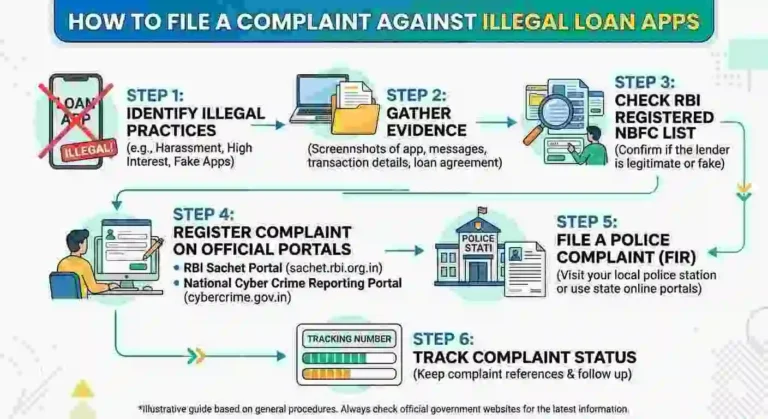
Record everything. Phone calls, video of in-person visits, screenshots of threatening messages. Then file a formal complaint with the Banking Ombudsman, or send a written complaint to the bank’s own grievance department. If the harassment is severe — threats of violence, public shaming, contacting minor children — file an FIR at the police station.
A family friend went through this last year. An NBFC’s recovery agents showed up at her kids’ school. She recorded the interaction, filed a complaint with the Ombudsman, and within a month,th the NB apologised formally, removed those agents, and gave her an extended repayment timeline. The agents were blacklisted.
You don’t have to tolerate abuse. The rules exist. Use them.
Option 5: Lok Adalat — Fast, Free, and Surprisingly Effective
Honestly, this might be the most underused option out there. Lok Adalats are “people’s courts” where loan disputes get resolved through mediation. No adversarial courtroom battle, no years of waiting.
Both you and the bank sit with a mediator. You work out numbers that both sides can accept. The agreement becomes legally binding immediately — no appeals.
Why This Works So Well for Borrowers
- Zero court fees
- You don’t need a lawyer (though you can bring one)
- Most cases finish in a single sitting
- Settlement amounts are usually very fair
Banks regularly refer their NPA accounts to Lok Adalat. But if your case hasn’t been referred yet, you can request it yourself through the District Legal Services Authority.
Option 6: Insolvency — The Final Door
I won’t sugarcoat this. Filing for insolvency under the Insolvency and Bankruptcy Code (IBC) 2016 is a last resort. You go here when restructuring has failed, settlement isn’t possible, and you genuinely have no way to repay.
When you file, a moratorium kicks in. All recovery actions stop. A professional evaluates your finances and creates a plan based on what you can actually pay. If no plan works, some non-essential assets may be sold off to settle debts.
But you don’t lose everything. Basic household goods, tools of your trade, a reasonable amount of savings — these are protected under the law.
Should you file? Only if every other option is exhausted. It impacts your financial life for years. But if you’re at rock bottom with no other path forward, this exists specifically to give people a structured way to start over.
Your Action Plan — Starting Today
| Step | What to Do | Why It Matters |
|---|---|---|
| 1 | List every debt — lender, amount, rate, EMI, months overdue | You can’t solve what you can’t see clearly |
| 2 | Rank them — secured first, then tax, then high-interest | Losing your house or car is worse than a credit score dip |
| 3 | Call your most critical lender today | Proactive borrowers get far better treatment |
| 4 | Ask about restructuring or settlement | These options exist — but only if you ask |
| 5 | Document every interaction going forward | Written records protect you legally |
| 6 | Consult a credit counsellor or legal aid | Many are free — and they’ve seen cases like yours |
Myths That Are Keeping You Stuck
The babankill seize my house.” Not without following the full SARFAESI Act procedure — notices, response period, legal steps. You have rights at every stage.
“Settlement is illegal.” Banks literally have official One-Time Settlement policies. It’s as legal as the loan itself.
“My CIBIL score is destroyed forever.” Scores bounce back. Two to three years of responsible behaviour— a secured credit card, timely utility bills — and you’ll see it climb.
“Recovery agents can do whatever they want.” They can’t. They have zero independent authority. Without a court order, they cannot take any action against you or your property.
Here’s What I Really Want You to Hear
Debt carries this crushing shame that stops people from acting. I’ve seen it freeze people for months — sometimes years. They feel like failures. Like they’re the only ones going through this.
You’re not. And the people who recover? They aren’t necessarily richer or luckier. They’re the ones who stopped avoiding the problem and started using the legal tools available.
Restructuring, settlement, Lok Adalat, and insolvency — none of these are loopholes. They’re safety nets built into the system because life is unpredictable,e and the learner recognises that.
Do one thing today—just one. Pick up the phone. Write a letter. Google the Lok Adalat schedule in your district. Talk to someone who knows this stuff.
One step changes everything. And you deserve that fresh start.
Links:-
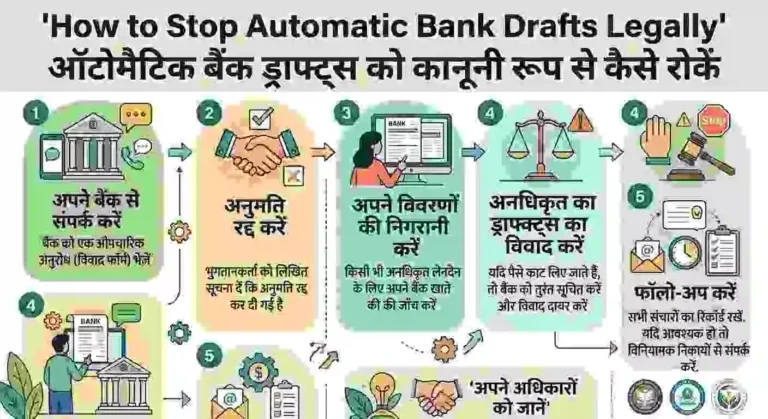
- How to Stop Automatic Bank Drafts Legally
- https://www.consumerfinance.gov/ask-cfpb/what-is-a-debt-relief-program-and-how-do-i-know-if-i-should-use-one-en-1457/
About The Author