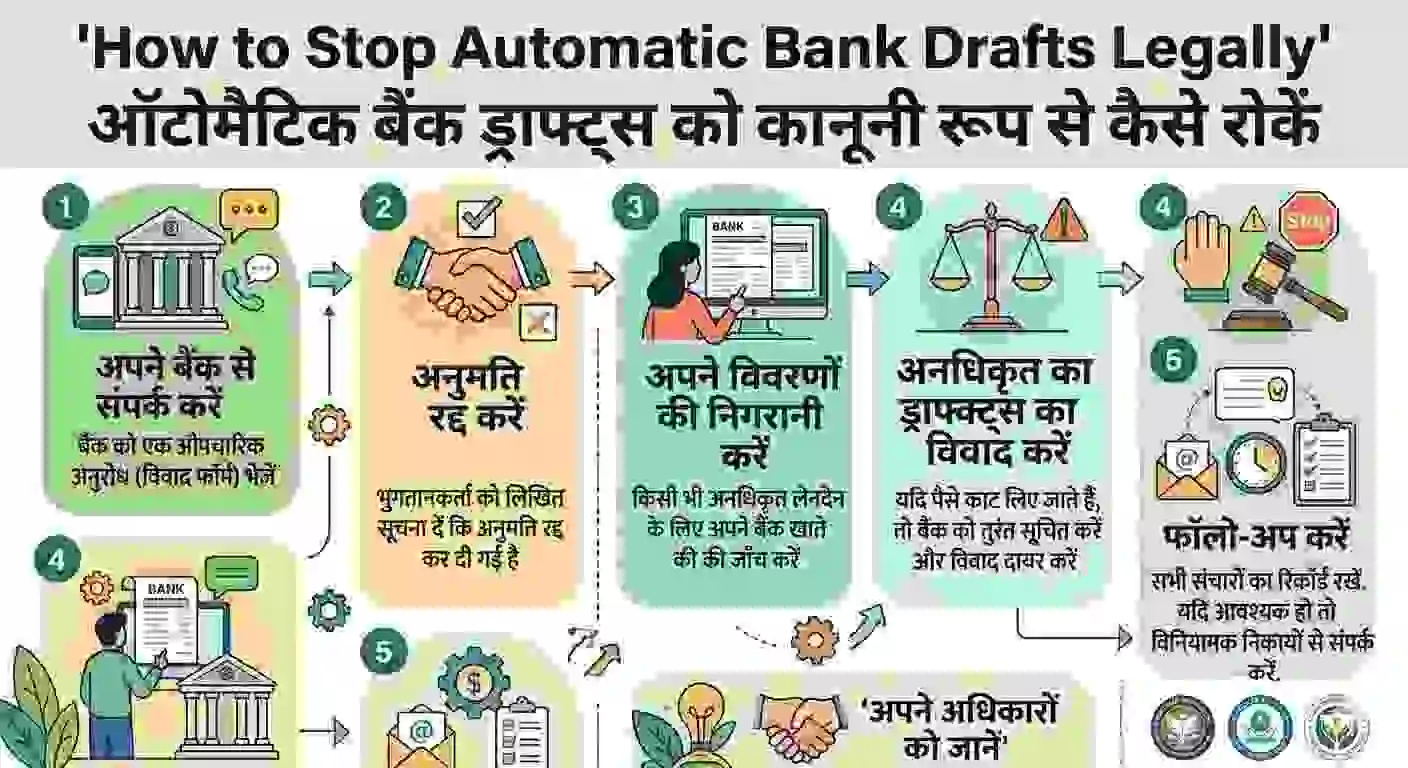
How to Stop Automatic Bank Drafts Legally
Introduction
You know that feeling when you’re scrolling through your bank statement, and you see a charge you weren’t expecting? Or worse — a charge you thought you already cancelled? Yeah. That particular kind of annoyance hits different.
I dealt with this myself not too long ago. There was a meal kit company — I’d ordered one box to try it out, decided it wasn’t for me, and thought I’d cancelled. Except I apparently didn’t cancel the right way, or maybe their system just ignored it. Either way, $34.99 kept vanishing from my account every single month. By the time I actually caught it and did the math, they’d quietly taken close to $200 from me.
That whole mess forced me to actually learn how this stuff works. How automatic drafts are set up, what rights you have as a customer, and what steps you actually need to take to make them stop — without accidentally causing new problems.
So that’s what I want to walk you through here. Plain language. No banking jargon. Just what to do, how to do it, and a few things I wish someone had warned me about before I went through it myself.
One thing I should mention upfront: I’m not a lawyer or a financial advisor. Everything here comes from personal experience and research I’ve done along the way. If you’re dealing with really large amounts or something that’s turning into a legal situation, talk to a professional. For most everyday scenarios, though, this should cover you.
So What Is an Automatic Bank Draft, Exactly?
I want to make sure we’re talking about the same thing, because there’s actually some confusion around this that trips people up.
An automatic bank draft — you’ll also hear it called an ACH debit, auto-debit, or direct debit — is basically when you’ve given a company permission to reach into your bank account and take money on a regular schedule. At some point, you handed over your account number and routing number, or you filled out some authorisation form, and that gave them the green light to withdraw funds whenever the payment was due.
Think gym memberships. Car insurance premiums. Loan payments. Utility bills. That streaming service you signed up for at 1 AM. Any of those could be running as an automatic draft.
Now here’s a really important distinction that a lot of people miss. There’s a difference between a recurring debit card charge and an ACH bank draft. If you gave the company your debit card number, that’s a recurring card transaction. If you gave them your actual bank account and routing numbers, that’s an ACH draft. They look similar on your statement, but stopping them inrks a little differently.
For card-based charges, you’d typically call your bank and have them block that specific merchant on your card, or get a new card number issued. For ACH drafts — the ones pulled directly from your account — you need to go through a formal stop payment process, which is what most of this article covers.
Worth knowing the difference before you start making calls.
And here’s the thing that makes all of this possible to fix: the foundation of every automatic draft is your permission. You gave that permission at some point. And legally, anything you gave permission for, you can also take back. That one principle is the backbone of everything I’m about to explain.
You Have More Legal Protection Than You Probably Realise
Most people I’ve talked to about this assume they’re kind of stuck. Like, once you agree to automatic payments, that’s it, you’re locked in until the company decides to let you go. That’s just not how it works.
The Electronic Fund Transfer Act
There’s a federal law called the Electronic Fund Transfer Act — EFTA for short —, and it’s enforced by the Consumer Financial Protection Bureau. Under this law, you have a clear right to stop any pre-authorised electronic payment coming out of your account.
And here’s the part that surprises everyone: you don’t need to cancel with the company first before going to your bank. A lot of people think they have to resolve everything with the merchant before the bank will do anything. That’s wrong. Your bank is legally obligated to honour your stop payment request regardless of what’s going on between you and the company.
I didn’t know this for the longest time. Would’ve saved me a lot of frustration if I had.
Regulation E — The Fine Print That’s Actually on Your Side
Regulation E works alongside the EFTA and gets into some really useful specifics:
- You can pull back your authorisation for automatic debits whenever you want
- If you give your bank notice at least three business days before the next scheduled payment, they have to stop it
- And — this is a big one — if the bank lets the payment go through anyway after you properly notified them, the bank is on the hook for any damages. Not you.
That last part gave me a lot of confidence when I was dealing with my own situation. Knowing that the bank bears responsibility if they mess up after I’ve done my part.
But What About the Contract I Signed?
This is where people get tangled up. Yes, you probably agreed to some terms and conditions when you set up the automatic payments. And sure, the company might have clauses about cancellation fees or notice periods or whatever.
But those terms are between you and the company. They have nothing to do with your bank’s legal obligation. Federal law trumps a company’s internal cancellation policy when it comes to what your bank must do.
Could the company potentially bill you for an early termination fee or chase you for money they say you owe? Maybe. That’s a separate matter between you and them. But they absolutely cannot force your bank to keep pulling money out of your account once you’ve taken back your authorisation.
Different issues. Different lanes. Important to keep them separate in your head.
The Actual Steps to Stop an Automatic Draft
Alright, enough background. Here’s what you actually need to do. I’m putting these for a reason — following this sequence tends to result in the fewest headaches.
Step 1: Tell the Company You’re Done
I know I just spent two paragraphs explaining that you don’t technically have to start here. But practically speaking? Starting with the company usually makes the whole process go more smoothly.
Get in touch with them — phone, email, whatever — and specifically say you want to revoke your authorisation for automatic bank withdrawals. Use those words. Don’t just say “I want to cancel my membership” because that might not cover the payment authorisation part.
Write down everything. The date. The time. Who do you speak with? What they said. Any reference numbers they gave you? If you can do the whole thing over email instead of phone, even better — you’ll have a written trail without having to create one yourself.
Here’s roughly what I sent when I was dealing with my meal kit situation:
“I’m writing to formally revoke my authorization for automatic debits from my bank account ending in [last 4 digits]. Please cancel all future automatic withdrawals and confirm this cancellation in writing. My account number with your company is [number].”
Nothing fancy. Just clear and direct.
Step 2: Call Your Bank and Request a Stop Payment
Even if the company says “yep, all taken care of”, go to your bank anyway and put a stop payment in place. I cannot stress this enough.
I once took a company at their word. “Your cancellation has been processed,” they said. Next month, another charge appeared. Called them again. “Oh, it takes one billing cycle to go through.” Month after that? Still getting charged. “We’re looking into it.” Uh huh.
If I’d placed a stop payment with my bank from the start, none of those extra charges would’ve happened.
You can usually do this by calling your bank, going into a branch, or sometimes through online banking or the mobile app. Just tell them you want to place a stop payment order on automatic debits from a specific company. Give them the company name, the typical amount, and when it usually hits.
Timing matters here. You need to make this request at least three business days before the next payment is scheduled. Don’t cut it close. If the draft happens on the 15th, don’t call on the 12th and hope for the best. Give yourself some breathing room.
And here’s something I wish I’d known earlier — banks usually charge a fee for stop payment orders. It’s typically somewhere between $25 and $35, depending on your bank. Which means if you’re trying to stop a $10 monthly subscription, the stop payment fee might actually cost more than just eating one more charge while you sort things out with the company directly. Worth doing that math before you decide on your approach.
Step 3: Follow Up With Your Bank in Writing — This Part Is Critical
This is the step that catches people off guard. If you only told your bank over the phone to stop the payment, that verbal request expires in 14 days unless you back it up with something written.
Fourteen days. That’s it. After that, the bank can technically let the payments start up again.
So, within those two weeks, send your bank a written confirmation. Letter or email — whatever they accept. Include your name, account number, the company you want blocked, the payment amount, the usual dates, and a clear statement revoking authorisation.
Here’s my recommendation: send it via certified mail if you’re doing it by letter. That way, you’ve got proof it was received, with a date stamp. If things ever go sideways, that tracking receipt becomes incredibly valuable. Regular mail works fine most of the time, but certified mail gives you that extra layer of documentation that can really matter.
Keep a copy for yourself. Always.
Step 4: Watch Your Account Closely
For the next two or three months, check your statements more carefully than usual. You’re looking for any charges from that company — but also for anything unfamiliar.
Some companies process payments under different business names or through separate entities. So the charge might not show up with the name you expect. Look for any unfamiliar deductions around the same date and same general amount.
I had a situation where a company I’d cancelled with started billing under a slightly different name — like “XYZ Services LLC” instead of their consumer-facing brand name. If I hadn’t been paying attention, I would’ve missed it completely.
Step 5: Dispute It If They Charge You After All That
If money leaves your account after you’ve properly revoked authorisation and placed a stop payment, call your bank right away and file a formal dispute.
Federal law says the bank has to investigate and put the money back in your account on a provisional basis — usually within 10 business days — while they sort things out.
Here’s roughly how the timeline looks:
| What Happens | When |
|---|---|
| You file the dispute | Day 1 |
| The bank gives you a provisional credit | Within about 10 business days |
| The bank investigates the claim | Can take up to 45 days, sometimes 90 |
| Final decision | You either keep the credit, or the bank tells you why they’re reversing it |
In most cases I’ve seen or heard about, disputes over unauthorised auto-debits land in the customer’s favour. Especially when you’ve got your documentation together — the cancellation request, the stop payment order, the written follow-up. That paper trail does the heavy lifting for you.
When Companies Keep Charging Despite Everything
This happens way more than it should. You’ve cancelled. Your bank has a stop payment. You’ve got the written confirmation. And somehow, money is still disappearing. Maybe under a different name. Maybe a slightly different dollar amount. Some companies are just badly organised. Others are playing games on purpose.
Either way, you’ve still got options.
Closing the Account and Starting Fresh
This is the nuclear option, and I won’t pretend it’s convenient. Closing your bank account and opening a new one means updating every legitimate auto-payment you have, redirecting your direct deposit, getting new checks — the whole thing.
But sometimes it’s genuinely the fastest path to peace. Someone I know went rounds with a subscription box company for almost three months. Different phone calls, different promises, same charges. She finally just opened a brand new checking account at a different bank. Charges stopped immediately. She told me she wished she’d done it two months earlier.
Filing a Complaint With the CFPB
The Consumer Financial Protection Bureau has an online complaint portal at consumerfinance.gov/complaint. When you file there, the CFPB contacts the company directly on your behalf.
From what I’ve observed, companies tend to get a lot more cooperative when a federal agency reaches out. It’s the difference between you asking them nicely and a regulator knocking on their door. Suddenly, things get “resolved” very quickly.
Contacting Your State Attorney General
Every state has a consumer protection division under the AG’s office. Unauthorised recurring charges absolutely fall under their umbrella. A complaint here creates an official record and adds pressure.
Small Claims Court for Bigger Amounts
If a company has incurred hundreds or even thousands through unauthorized charges, small claims court is a real option. Filing fees are usually between $30 and $75, depending on your state. You don’t need a lawyer. You just need your documentation — which, if you’ve been following the steps above, you already have.
Dealing With Specific Situations
A few scenarios come up over and over, and each one has its own quirks.
Gym Memberships
If there’s a hall of fame for companies that make cancellation miserable, gyms would take the top three spots. I’ve heard almost comedic stories. One gym required an in-person visit to cancel, but only accepted cancellations on week, days between 10 and 2 — when most people are at work. Another one needed a certified letter mailed to their corporate headquarters. In a different state.
My approach with gyms: figure out exactly what their contract requires for cancellation and do that to the letter. But at the same time, place a stop payment with your bank. Don’t rely on just one path. And save everything — print the cancellation policy from their site, keep your certified mail receipt, screenshot any confirmation emails.
Insurance Payments
Be really careful here. If you just stop the auto-payment without having another payment method in place, your coverage could lapse. For something like car insurance or health insurance, even a short gap can cause serious problems — you could be driving without coverage, or you might face penalties when you try to get insured again.
Before you touch the auto-draft, call your insurance provider and either switch to paying manually through their website, set up a different payment method, or properly cancel the policy if that’s your intention.
Loan Payments
This one’s important. Stopping the automatic draft on a loan does NOT stop you from owing the money. The debt is still there. If you block the payment but don’t pay through another method, you’ll go delinquent, and that’s going straight to your credit report.
What you can do is switch from automatic to manual payments. Most lenders are fine with this. You’re still paying the same amount on the same schedule — you just control the timing instead of giving them an open door to your account.
Free Trials You Forgot to Cancel
We’ve all done it. Signed up for a “free 7-day trial,” fully intending to cancel before it charged, then completely forgot. Now there’s a monthly fee hitting your account for something you used once.
Good news — most companies will refund the first charge if you reach out quickly and explain what happened. Just be polite and straightforward about it. If they refuse, that’s when the bank dispute process comes into play. Charges from trials where the billing terms weren’t clearly spelt out are very much disputable.
Mistakes I’ve Seen People Make
Thinking the Banking App Block Is Enough
A lot of banking apps now let you “block” specific merchants. And that feature can help. But it’s not the same thing as a formal stop payment order under Regulation E. An app-level block might not carry the same legal protections, and some ACH drafts can slip through anyway. Always go through the official stop payment process.
Being So Afraid of Collections That They Do Nothing
This is the one that frustrates me most. People know they’re being charged unfairly. They know they cancelled. But they’re terrified that if they stop the payments, the company will send them to collections and ruin their credit.
Look — if you genuinely owe money under a contract you agreed to, then yes, stopping payment doesn’t make that debt vanish. But if a company is charging you for a service you properly cancelled? If they’re billing you after your agreement ended? If the charges are straight-up unauthorised? Those aren’t real debts. Don’t let fear of a collection threat keep you paying for something you don’t owe.
Getting Brushed Off by the Bank
I’ve heard this from more people than you’d expect. They call their bank, and the person on the phone says something like “there’s nothing we can do on our end” or “you’ll need to work that out with the merchant directly.”
That’s flat-out wrong. Your bank is required by federal law to honour a properly submitted stop payment request. If the first rep gives you pushback, ask for a supervisor. If the supervisor does the same, mention Regulation E by name. And if they still won’t budge, file a complaint with the CFPB — against the bank this time.
Quick Reference Checklist
Bookmark this or take a screenshot. Comes in handy when you’re in the middle of dealing with it and just need to remember what’s next.
| Step | What to Do | Things to Remember |
|---|---|---|
| 1 | Cancel with the company | Get written confirmation, save everything |
| 2 | Place a stop payment at your bank | Do it at least 3 business days ahead. Expect a $25-35 fee. |
| 3 | Send written confirmation to your bank | Must be within 14 days of verbal request. Use certified mail if possible. |
| 4 | Check your statements for 2-3 months | Look for charges under different names or amounts |
| 5 | Dispute any charges that get through | The bank must provisionally credit you within about 10 business days |
| 6 | Escalate when needed | CFPB complaint, state AG, or small claims court |
Preventing This Headache Next Time
After going through all this myself, I changed a few habits. They’re small things, but they’ve saved me from repeating the experience.
Virtual card numbers are a game-changer. Services like Privacy.com let you generate disposable card numbers for subscriptions. You set a spending cap, and when you want to stop paying, you just turn the card off. No calls. No stop payments. No waiting. Some banks offer this built into their apps, too.
Calendar reminders for free trials. The moment I sign up for any free trial now, I set a phone reminder for two days before the trial ends. Takes five seconds. Has saved me actual money multiple times already.
A simple spreadsheet tracking recurring payments. I keep a Google Sheet with every auto-payment — company name, amount, billing date, and how to cancel. Five minutes to set up. Makes everything so much easier when you actually need to cancel something.
Actually, reading the cancellation policy. I know. Nobody does this. I barely do this. But I at least skim the cancellation section now before giving any company my bank details. If their cancellation process involves certified mail to a PO box in another state with 60 days’ notice — that tells me something about how they operate, and maybe they don’t need my account number.
Wrapping This Up
None of this is particularly complicated. It just requires following the steps in order and — above all — keeping records of everything you do along the way.
Federal law is genuinely on your side here. Your bank has to stop payments when you tell them to. Companies can’t keep pulling money from your account after you’ve revoked authorisation. If somebody tells you otherwise — whether it’s a customer service rep or even someone at your bank — they’re either uninformed or counting on you not knowing your rights.
The whole process, start to finish, takes maybe an hour of your time spread across a couple of days. Compare that to watching money leak out of your account month after month for something you don’t even use? There’s no contest.
Handle it today. Seriously. Not tomorrow, not next week. Today. Future you is going to appreciate it.
Dealing with a specific situation that doesn’t quite fit what I covered here? Drop it in the comments. I’ve been through enough of these that I can probably help you figure out your next move.
links:-
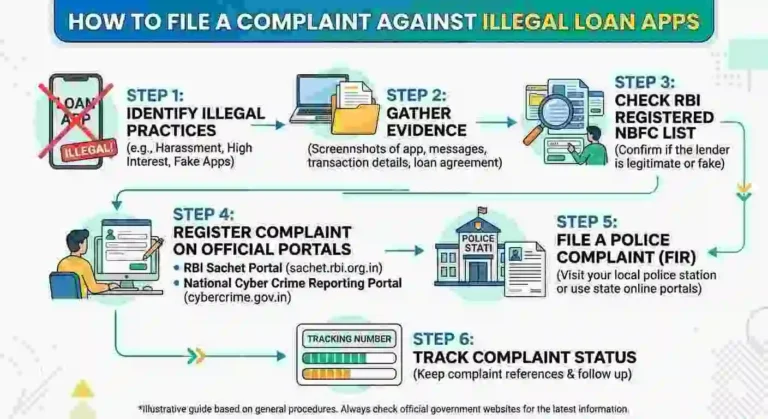
- How to File a Complaint Against Illegal Loan Apps
- https://ask.fdic.gov/fdicinformationandsupportcenter/s/article/Q-How-do-I-stop-an-automatic-payment-from-being-deducted-from-my-checking-account?language=en_US
About The Author



Nice information sir 👍
Your article so amazing sir mai dusri baar aaya hu aap ki website par itna real or experience content kahi nhi mila jitna aap Kai website par milta I am 😊 Happ